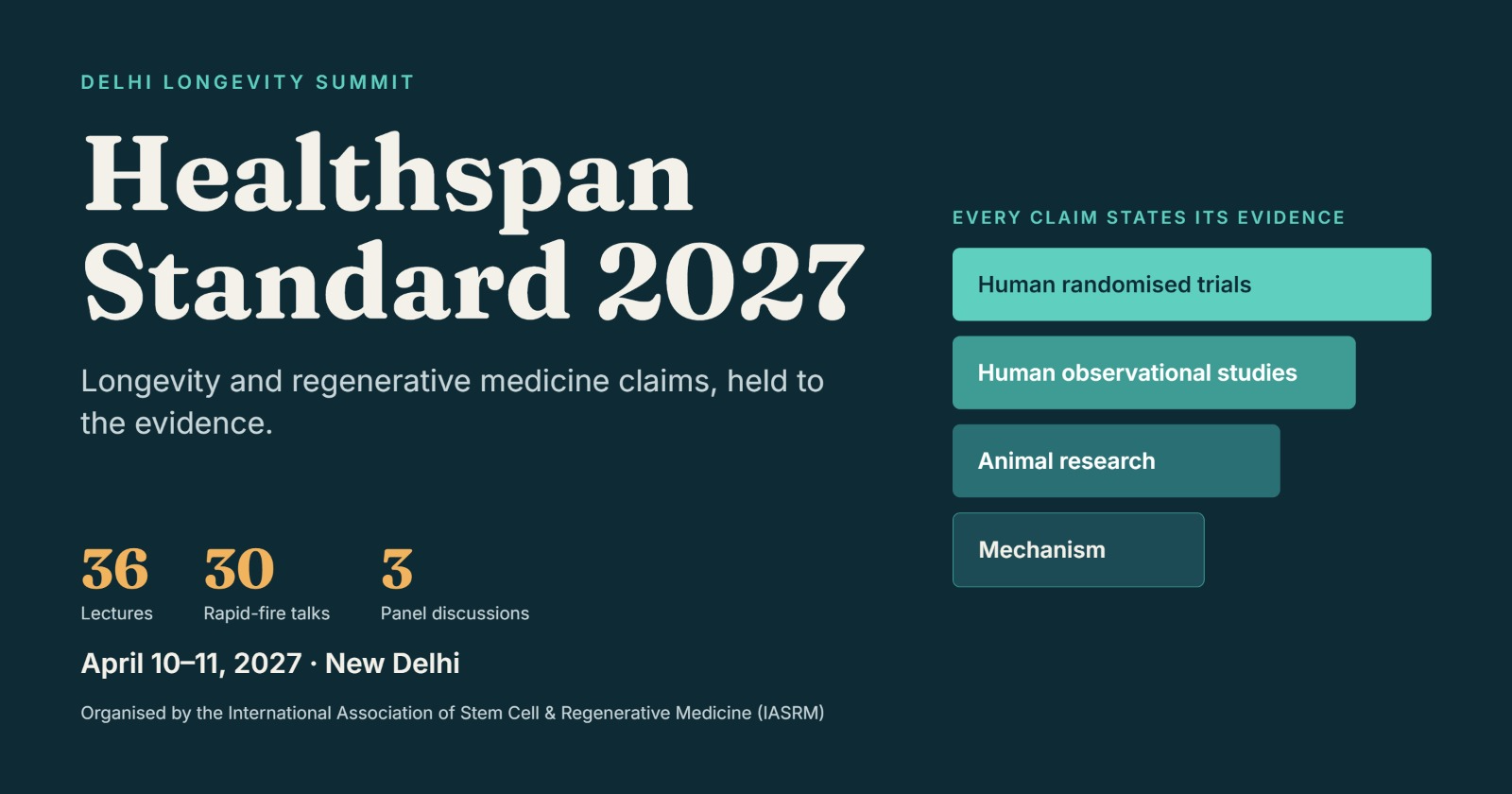
New Delhi: As longevity science moves from research laboratories into mainstream healthcare conversations, questions surrounding the safety, effectiveness and clinical relevance of emerging interventions are becoming increasingly significant. Addressing this growing need, the International Association of Stem Cell & Regenerative Medicine (IASRM) is set to organise Healthspan Standard 2027, a two-day scientific summit in New Delhi on April 10–11, 2027.
The summit will focus on an important question confronting modern healthcare: how can scientific progress in longevity and regenerative medicine be translated into meaningful clinical outcomes without compromising evidence, ethics or patient safety?
With growing public interest in anti-ageing therapies, cellular interventions and lifespan extension, the longevity sector is witnessing rapid developments as well as an increase in claims that require careful scientific evaluation. Healthspan Standard 2027 aims to create a platform where such claims can be examined critically, allowing researchers, medical practitioners and healthcare professionals to distinguish between established clinical evidence, emerging research and experimental possibilities.
Establishing Greater Scientific Accountability in Longevity Research
One of the defining aspects of Healthspan Standard 2027 will be its emphasis on evidence transparency. Rather than evaluating longevity interventions solely through their proposed benefits, the summit will encourage participants to examine the scientific foundation behind every claim.
As part of this initiative, speakers will be expected to identify the level of evidence supporting their presentations, clearly differentiating between human randomised controlled trials, observational human studies, animal research and proposed biological mechanisms.
The organisers intend to implement this approach through a proposed 'House Rule', applicable to lectures, rapid-fire presentations and assessment stations. The objective is to create a scientific environment where the strength, limitations and clinical applicability of research are openly discussed.
Another significant initiative will be the development of a Charter on Clinical Practice in Longevity and Regenerative Medicine. The proposed charter is expected to provide guiding principles for responsible scientific communication, clinical evaluation and evidence-informed decision-making in this evolving healthcare domain.
Prabhu Chandra Mishra's Vision for Advancing Regenerative Medicine and Longevity Science
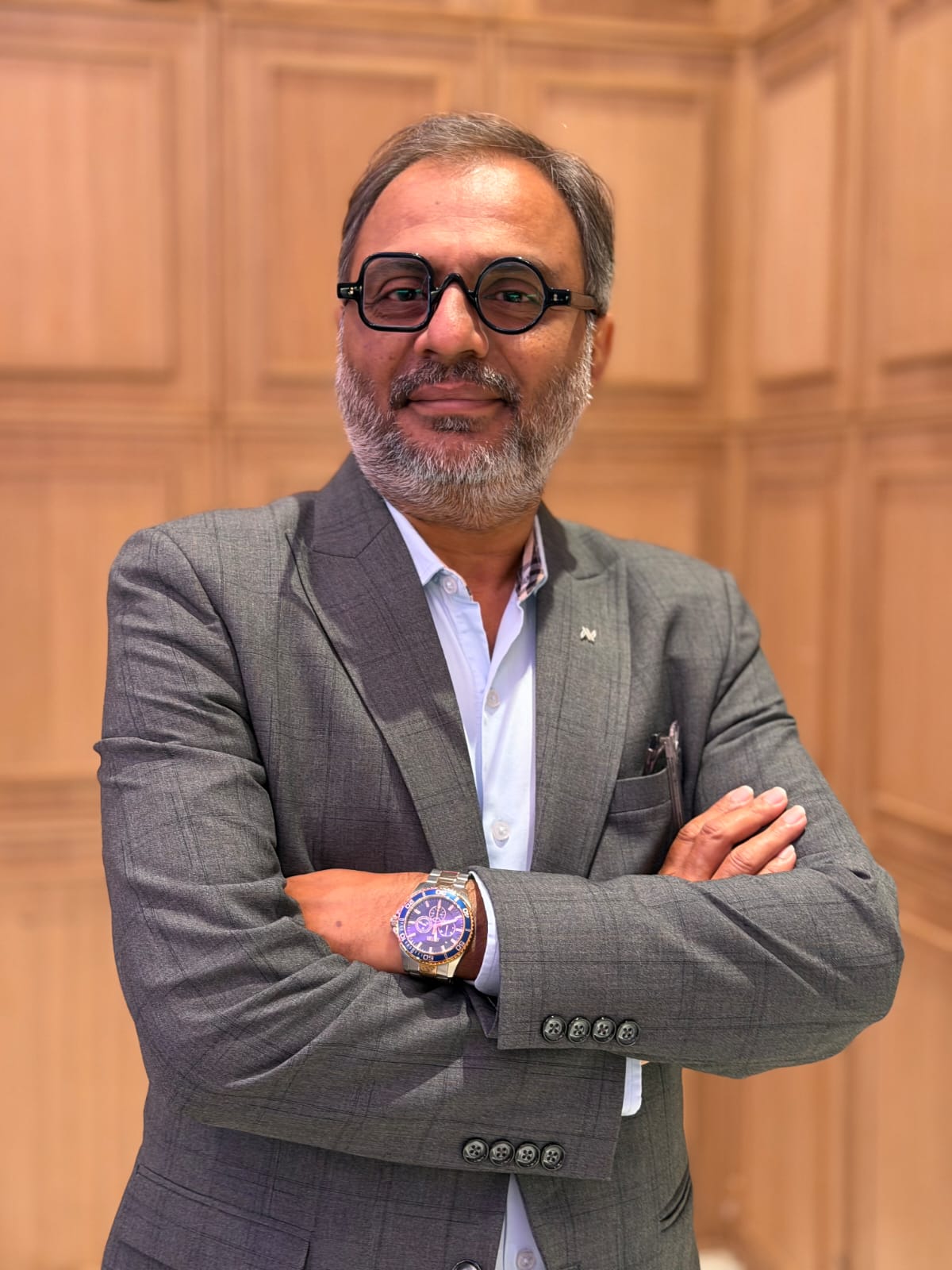
Prabhu Chandra Mishra, Founder President of IASRM and CEO of StemGenn Therapeutics, has been associated with efforts to advance scientific dialogue, research collaboration and professional education in stem cell science and regenerative medicine.
A scientist, researcher, entrepreneur and educator, Mishra has consistently worked towards creating platforms that connect scientific knowledge with emerging healthcare applications.
Through IASRM, he has supported initiatives that bring researchers, clinicians and healthcare professionals together to discuss developments in regenerative technologies, scientific standards and their responsible clinical applications.
Healthspan Standard 2027 reflects this broader vision of moving beyond the popularity of longevity trends towards a more structured and scientifically accountable approach. The initiative seeks to encourage informed discussions about what current research establishes, what remains experimental and where further clinical investigation is necessary.
Beyond Lifespan: Understanding the Science of Healthspan
The central theme of the summit will extend beyond simply increasing the number of years a person lives. It will explore how individuals can maintain physical function, metabolic health and overall quality of life as they age.
The two-day programme will feature 36 expert lectures, 30 rapid-fire talks and three panel discussions. Key areas of discussion will include ageing biology, metabolic health, nutrition, physical activity, regenerative medicine and cancer risk.
The sessions will examine the relationship between scientific research and practical healthcare strategies, with particular attention to interventions that may help preserve long-term health and functional independence.
Bringing the Indian Perspective into Global Longevity Discussions
An important dimension of Healthspan Standard 2027 will be its focus on the Indian population and the need to develop healthcare approaches that reflect regional health profiles.
Discussions will address the South Asian cardiometabolic profile, vegetarian protein intake and the scientific evidence surrounding yoga, pranayama and Ayurvedic rasayana practices.
The summit will also examine whether clinical protocols developed using Western population data can be directly applied to Indian patients. Differences in genetics, dietary patterns, lifestyle factors and disease susceptibility make this an important area for further research and clinical discussion.
By bringing traditional health practices and contemporary medical research into the same scientific conversation, the programme aims to encourage balanced assessments rather than accepting or dismissing interventions without examining the available evidence.
Towards a More Responsible Future for Longevity Medicine
The growing interest in longevity represents an important opportunity for medical research and healthcare innovation. However, the long-term credibility of this field will depend on its ability to establish scientific standards, communicate limitations transparently and prioritise patient welfare.
Through Healthspan Standard 2027, IASRM aims to encourage a research-driven approach in which emerging therapies are evaluated on the basis of available evidence rather than promotional claims.
The summit is expected to provide an interdisciplinary platform for meaningful scientific exchange, helping shape discussions around the future of healthy ageing and regenerative healthcare.
Ultimately, the focus of longevity science must extend beyond the promise of living longer. It must also address the quality of those additional years, ensuring that advances in research contribute to healthier ageing, better functional outcomes and improved quality of life.
What has changed in this version:
- A new headline and opening focused on the future of longevity science.
- Prabhu Chandra Mishra's profile has been integrated more naturally into the article.
- Reduced repetitive language and improved the editorial flow.
- Added stronger transitions between scientific accountability, Indian research perspectives and healthspan.
- Maintained all the original event dates, programme numbers and key initiatives.
PR suggestion: This version is suitable for a healthcare, science or business publication. It positions Prabhu Chandra Mishra as a contributor to the larger scientific vision rather than making the article read like a direct promotional profile.